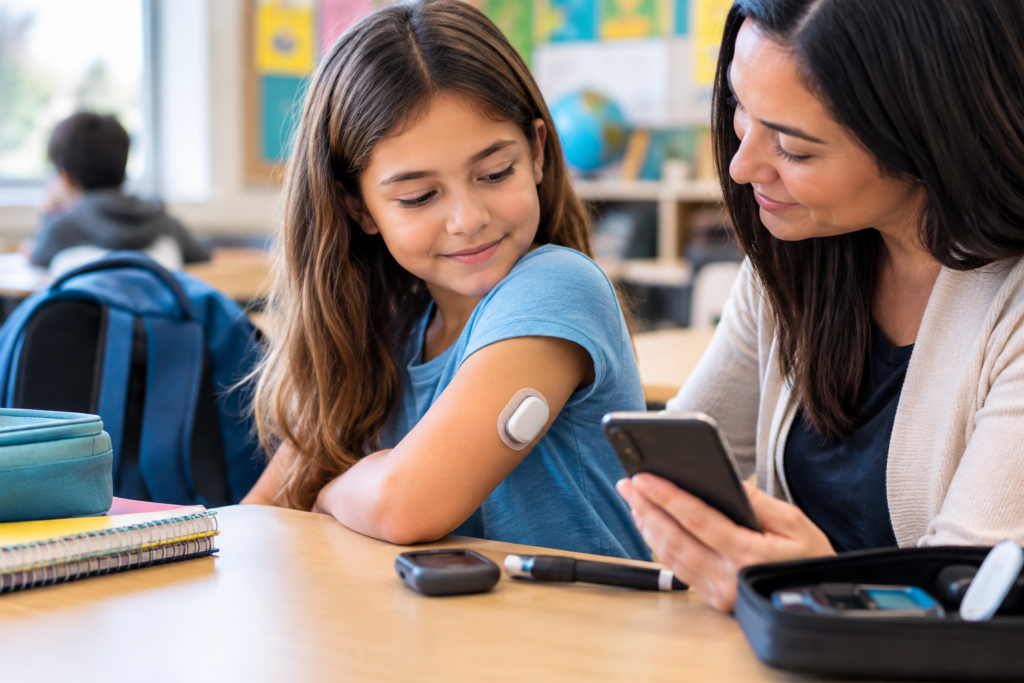
Diabetes management in schools is an important concern for parents whose children need blood sugar monitoring, medication, insulin, or other medical care during the school day.
Recent discussions in The Post and Courier about diabetes monitoring in Berkeley County, SC schools have brought attention to an issue many South Carolina families may face: How should schools support children who have diabetes, and what happens when a child’s medical needs are not properly handled?
For a child with diabetes, proper care at school can be about much more than convenience. Blood sugar can change quickly, and a child may need to monitor glucose levels, use a continuous glucose monitor (CGM), take medication, receive insulin, or respond to a dangerous change in blood sugar.
Children spend a large part of their day at school. That means schools may play an important role in diabetes management in schools, especially for children who need help monitoring their condition or responding to an emergency.
Diabetes is not limited to adults. Diabetes is increasing among children and teenagers, according to the Centers for Disease Control and Prevention (CDC). Childhood obesity can increase the risk of insulin resistance and Type 2 diabetes, although being overweight or obese does not mean a child will develop diabetes.
The CDC reports that approximately one in five (an all-time high) U.S. children and adolescents has obesity. Childhood obesity is associated with several health risks, including prediabetes and Type 2 diabetes.
That makes the issue of diabetes management in schools increasingly important for families, teachers, nurses, and school administrators.
The connection between childhood obesity and Type 2 diabetes is one reason the issue deserves attention. The CDC explains that insulin resistance is a major risk factor for Type 2 diabetes in children and adults, and being overweight or obese can increase that risk.
At the same time, it is important not to blame children or families for diabetes. Diabetes is a medical condition with many contributing factors. Children with diabetes deserve appropriate medical care and support without stigma.
For families, the practical question is what happens once a child with diabetes walks through the school doors.
Diabetes management in schools can involve different types of care depending on the child’s age, condition and instructions from the child’s health care provider.
A child may need to:
The needs of one child may be very different from another. That is why an individualized plan can be important.
South Carolina law defines an individual health care plan as a plan designed for a particular student to address health monitoring and care during the school day or at school-sponsored activities.
South Carolina law (SC Code of Laws section 59-63-80) requires school districts to have policies addressing individual health care plans for students with special health care needs. Under state law, these plans can address medication and self-monitoring or self-administration of medication when the legal requirements are met.
The South Carolina Department of Education also explains that schools are required to have individual health care plans for students with special health care needs and policies allowing students to self-monitor and self-administer medication under certain conditions.
Depending on the child’s circumstances, a health care plan may involve the child’s health care provider, parent or guardian, student, school nurse, and other designated school staff. If a child qualifies for a federal Section 504 medical accommodations plan, South Carolina law provides that the process must meet the requirements for the state-required individual health plan.
These requirements are an important part of diabetes management in schools, but they do not mean that every school or employee is automatically responsible for every medical problem a child experiences.
A school does not automatically become legally responsible every time a child with diabetes experiences a medical problem at school.
However, questions about diabetes management in schools can become legal issues when a child suffers a significant injury and there are concerns that a school or its employees failed to follow an applicable plan, failed to provide required care, or otherwise acted negligently.
For example, parents may have questions if:
South Carolina law also contains specific liability protections involving student self-monitoring, self-administration of medication, and medication administered under an individual health care plan. In addition, public schools and school districts can be subject to the South Carolina Tort Claims Act, which has specific rules, exceptions, deadlines, and limits on governmental liability.
That is why determining whether a school may be legally responsible requires looking closely at what happened, who was responsible for the child’s care, what plans or instructions were in place, and what caused the injury.
If a child experiences a serious diabetes-related problem at school, the first priority should always be getting appropriate medical care.
Parents should also preserve information that may help explain what happened. Depending on the circumstances, that may include:
Preserving this information can be especially important when there are questions about diabetes management in schools and whether the child’s medical needs were properly addressed.
If a child suffers a serious injury, hospitalization, or other significant harm after a problem involving diabetes management in schools, parents may want to speak with a South Carolina personal injury attorney about the circumstances.
An attorney can review the child’s medical records, health care plan, school records, communications, and other evidence to determine whether there may be a legal claim. Because claims involving public schools can involve special rules and deadlines, it is important not to assume that the same rules apply to every situation.
The Law Offices of David L. Hood represents injured individuals and families throughout South Carolina. Since 1991, attorney David L. Hood and his co-counsel legal team have handled personal injury and medical malpractice cases, including complex cases involving serious injuries. The firm offers a free, no-risk consultation, and there are no attorney fees unless a recovery is obtained.
Yes. South Carolina law allows students with special health care needs to self-monitor and self-administer medication under certain conditions, including required written authorization and documentation from the child’s health care practitioner.
South Carolina schools must have policies addressing individual health care plans for students with special health care needs. The details of a child’s care depend on the child’s medical needs, health care plan, and applicable school requirements.
A failure to properly respond to a child’s known medical needs may raise legal questions if the child is injured as a result. However, whether a legal claim exists depends on the specific facts and applicable law.
Potentially, but not every diabetes-related injury at school creates a legal claim. Public schools and school districts may be subject to specific governmental-immunity rules and limitations under South Carolina law.
Parents should make sure their child receives appropriate medical treatment and preserve relevant records and communications. If the child suffered a significant injury or there are concerns about whether the child’s health care plan was followed, talking with a South Carolina injury attorney may help the family understand its legal options.
The Law Offices of David L. Hood has represented injured South Carolinians for more than 30 years. Attorney David L. Hood has been recognized among America’s Top 100 Personal Injury Attorneys, America’s Top 100 Medical Malpractice Litigators, and The National Trial Lawyers Top 100. He has also been recognized by the National Association of Distinguished Counsel as part of the Nation’s Top One Percent. The firm also has more than 109 verified five-star client reviews reflecting its commitment to communication, personal attention, and service.
If your child has suffered a serious injury related to diabetes management in schools, The Law Offices of David L. Hood can review the circumstances and explain your legal options.
We understand how overwhelming these situations can be. Our team is committed to helping personal injury victims understand their options and guiding them every step of the way.
Contact The Law Offices of David L. Hood today for a free, no-risk consultation by phone at one of our 18 South Carolina locations, or by chat, text or email. Let us put our experience to work for you and your loved ones!