
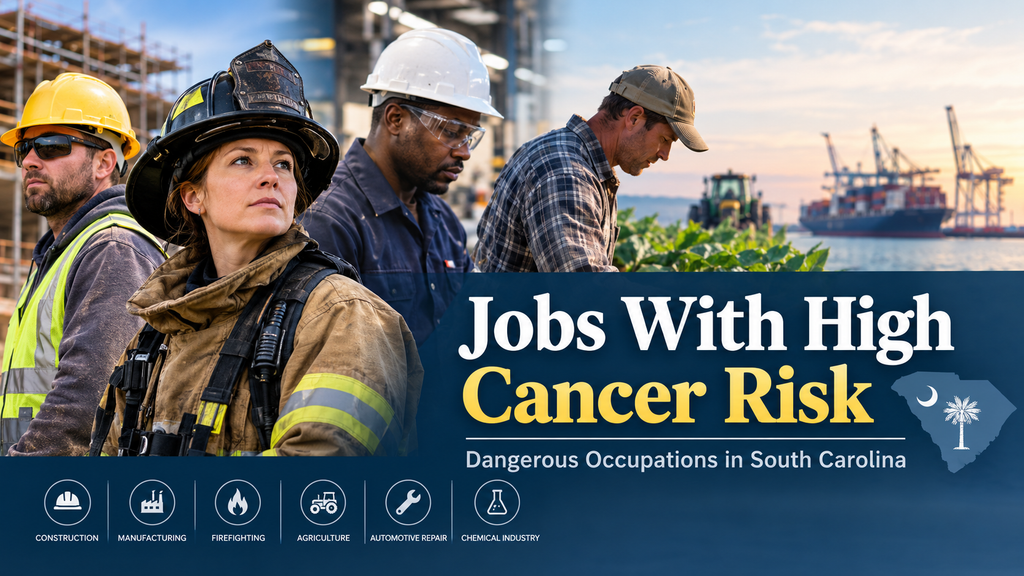
Jobs with high cancer risk can expose workers to asbestos, benzene, diesel exhaust, pesticides, and other substances that may cause cancer. Construction workers, firefighters, factory employees, mechanics, farmers, and other South Carolina workers may face cancer hazards on the job. Although workplace safety rules have reduced some dangers, workers continue to encounter cancer-causing agents. And certain cancers may not appear until years after the exposure occurred.
According to the Centers for Disease Control and Prevention (CDC), workplace exposure to carcinogens is one factor that can contribute to cancer. In fact, approximately 2-8% of all cancers worldwide are caused by carcinogens in the workplace.
A carcinogen is a substance or exposure that can cause cancer. Some occupational cancers can be prevented by identifying hazards, controlling exposure, and following proper safety procedures.
For workers and their families, understanding jobs with high cancer risk is about more than workplace safety. It is also about recognizing possible warning signs, understanding the importance of work history, and knowing what legal options may be available after a cancer diagnosis.
There is no single list of jobs that guarantees a worker will develop cancer. The risk depends on the substances involved, the amount and length of exposure, the safety measures in place, and other factors that affect a person’s health.
The CDC’s National Institute for Occupational Safety and Health (NIOSH) identifies firefighting, rubber manufacturing, paving, roofing, painting, and chimney sweeping among occupations associated with increased cancer risks.
Other jobs may involve exposure to specific cancer-causing substances. Here are some examples:
Construction workers may encounter asbestos, silica dust, diesel exhaust, welding fumes, and other hazardous materials. These risks can be especially important when workers repair, renovate, or demolish older buildings.
Asbestos was widely used in insulation, floor tiles, roofing, pipes, and other building materials. When asbestos-containing materials are disturbed, tiny fibers can enter the air and be inhaled. Exposure to asbestos can cause mesothelioma and lung cancer. Mesothelioma is a cancer that affects the lining of the lungs or other organs.
Construction workers who cut concrete, brick, stone, or similar materials may also breathe in respirable crystalline silica. Meaning, the small size of the particles can be breathed in and deposited in the lungs. Repeated exposure to silica dust can cause silicosis and is associated with an increased risk of lung cancer.
Roofers, painters, carpenters, and demolition crews may face other hazards depending on the products they use and the conditions at their worksites.
Workers should not assume that an older building is free of asbestos or that dust is harmless. Employers should identify potential hazards and follow applicable safety requirements before disturbing dangerous materials.
Firefighters face serious risks when entering burning buildings, extinguishing vehicle fires, and responding to other emergencies. Smoke can contain a mixture of dangerous chemicals released by burning furniture, plastics, vehicles, insulation, and other materials.
Depending on the fire, firefighters may encounter benzene, formaldehyde, and polycyclic aromatic hydrocarbons. Fires in older buildings can also disturb asbestos-containing materials.
The danger may continue after a fire is extinguished. Contaminants can remain on protective clothing, gloves, boots, tools, and equipment. These substances can spread to a firefighter’s skin, vehicle, or fire station if contaminated gear is not handled correctly.
Fire departments can help reduce exposure through appropriate protective equipment, cleaning procedures, decontamination, and safe storage of contaminated gear.
Firefighters who are concerned about occupational cancer should also discuss their work history and potential exposures with their healthcare providers.
Manufacturing is an important part of South Carolina’s economy. Workers in automotive production, metal fabrication, rubber manufacturing, machinery production, and other industrial settings may encounter substances that increase cancer risk.
The hazards vary by workplace and job duties. Potential exposures include:
Factory employees may encounter hazardous substances by breathing contaminated air or through skin contact. Proper ventilation, safe handling procedures, exposure monitoring, and appropriate protective equipment can help reduce these risks.
Workers should learn which chemicals are used in their work areas and review the applicable safety data sheets. Employers should provide training on workplace hazards and explain how to report unsafe conditions.
Mechanics may come into contact with asbestos, petroleum products, solvents, gasoline fumes, and diesel exhaust while repairing vehicles and equipment.
Some older brake and clutch components contained asbestos. Improper repair or cleaning methods can release fibers into the air. Mechanics who work with diesel engines or heavy equipment may also encounter diesel exhaust, particularly in poorly ventilated spaces.
Benzene is another concern because exposure can damage the blood-forming system and cause leukemia. The risk depends on the source, amount, and duration of exposure.
Automotive and equipment repair shops can reduce hazards through appropriate ventilation, approved cleaning methods, proper chemical handling, and suitable protective equipment.
Agricultural workers across South Carolina may handle pesticides, fertilizers, fuels, solvents, and other chemicals. Some also spend long hours operating diesel-powered machinery.
Certain pesticides and other agricultural chemicals have been linked to cancer, but the risk varies by substance and exposure level. It is not accurate to assume that every pesticide or farm job carries the same cancer risk.
Farm owners and employers should provide appropriate training, safe chemical storage, and protective equipment. Workers should follow product labels and safety instructions, including rules for entering treated areas.
Anyone who develops cancer and suspects a connection to agricultural work should tell their doctor about the chemicals they handled and the tasks they performed. Product names, application records, and dates of exposure may help when evaluating possible causes.
Workers in chemical manufacturing, petroleum-related operations, and industrial maintenance may encounter carcinogens during routine work or accidental releases.
Potential hazards include benzene, formaldehyde, certain metals, and other industrial chemicals. Workers may be exposed when cleaning equipment, repairing pipes, handling materials, or responding to spills.
Benzene is particularly important because it is associated with leukemia. The National Cancer Institute provides information about benzene exposure and its health effects at Cancer-Causing Substances: Benzene.
Employers should identify hazards, maintain appropriate controls, provide training, and follow applicable workplace exposure limits. Workers should never enter a tank, confined space, or hazardous area without the required training and authorization.
Nail technicians may repeatedly handle products containing solvents and other chemicals. Depending on the products and work environment, employees may breathe vapors or have chemicals contact their skin.
The risks vary by product and formulation. Not every nail product contains the same chemicals, and not every exposure creates the same level of risk.
Good ventilation, safe product handling, closed containers, and appropriate gloves can help reduce exposure. Employers should review product safety information and follow applicable workplace chemical requirements.
Workers should report unsafe conditions and seek medical advice when they experience symptoms that may be related to chemical exposure.
Truck drivers, diesel mechanics, road construction crews, and heavy equipment operators may spend long periods around diesel engines and exhaust.
Diesel exhaust contains a mixture of gases and particles. Exposure has been linked to lung cancer, although individual risk depends on the level and duration of exposure.
Road crews may also encounter asphalt fumes, silica dust, and other hazardous substances, depending on their job duties.
Employers can reduce these risks by maintaining engines, limiting unnecessary idling, improving ventilation, and using appropriate dust and fume controls.
Workers throughout South Carolina should understand the potential hazards associated with their occupations. The state’s manufacturing, construction, transportation, agricultural, and emergency response industries include jobs where exposure to carcinogens may occur.
For example, automotive and industrial workers in the Greenville-Spartanburg area may encounter welding fumes, metalworking substances, or industrial chemicals, depending on their what the job requires. Construction and demolition workers in Columbia, Charleston, Florence, and other growing communities may face asbestos or silica hazards when working with certain materials.
Port, ship repair, and maritime workers in the Charleston area may encounter diesel exhaust, welding fumes, solvents, or asbestos-containing materials with certain tasks. Agricultural workers in rural communities may handle pesticides and fuels, while firefighters across the state may encounter hazardous substances in smoke and contaminated protective gear.
These examples do not mean that every worker in these industries faces the same risk. The actual danger depends on the work performed, the substances involved, and the precautions taken.
South Carolina workers can learn more about workplace health hazards through NIOSH’s occupational cancer resources and the Occupational Safety and Health Administration (OSHA).
Yes. Some occupational cancers have long latency periods. This means many years can pass between exposure to a carcinogen and the development or diagnosis of cancer.
Asbestos-related diseases are a well-known example. Someone who worked around asbestos decades ago may later develop mesothelioma or lung cancer.
The delay can make it difficult to identify the source of exposure. A worker may have changed jobs, retired, or forgotten the details of a former workplace. Employers may have closed, and records may no longer be easy to find.
If you develop cancer and believe your job may have exposed you to harmful substances, give your healthcare provider a detailed work history. Include former employers, job titles, work locations, dates, and any chemicals or materials you remember handling.
A doctor can consider this information along with medical records, known exposure risks, and other health factors. Medical evidence may also be important if you pursue a legal claim.
Workers cannot control every workplace hazard, but practical safety measures can help prevent unnecessary exposure.
Learn about workplace chemicals. Ask which hazardous substances are used in your work area. Review safety data sheets and attend required training.
Follow safety procedures. Do not disturb materials that may contain asbestos or other dangerous substances without the appropriate assessment and controls.
Use suitable protective equipment. Respirators, gloves, and protective clothing must match the hazard and be used correctly. A basic dust mask is not a substitute for a respirator.
Pay attention to ventilation. Report excessive dust, smoke, fumes, or chemical odors. Employers should use appropriate controls to reduce exposure at the source.
Prevent contamination from spreading. Follow safety procedures for cleaning equipment, changing clothes, and storing contaminated gear. This is especially important for firefighters and workers who handle hazardous chemicals.
Report unsafe conditions. Follow workplace reporting procedures and document serious concerns when appropriate. Workers may also contact OSHA about workplace safety issues.
Tell your doctor about your work history. If you receive a cancer diagnosis, explain what you did for a living and whether you may have encountered hazardous substances.
Also read: National Institutes of Health’s (NIH) Update on Occupational Cancer for Better Cancer Prevention
A cancer diagnosis can lead to substantial medical expenses, missed work, lost income, and stress for an entire family. If you believe workplace exposure may have contributed to your illness, consider these steps.
You do not need to know exactly which chemical caused your cancer before asking about your legal rights. However, proving that an illness is work-related can be complicated, particularly when the exposure occurred many years ago.
Possibly. South Carolina law recognizes certain occupational diseases under S.C. Code § 42-11-10. Generally, the law requires a worker to establish that the disease arose directly and naturally from exposure in South Carolina to hazards peculiar to the job, under the specific legal standards outlined in the statute.
A cancer diagnosis does not automatically qualify for workers’ compensation. The evidence must establish the required connection between the disease and the employment. Medical evidence, work history, exposure information, and expert opinions may be critical.
The Law Offices of David L. Hood and his co-counsel legal team often work with independent medical experts to get second opinions and vocational specialists to prove how your injury affects your future ability to earn a living.
S.C. Code § 42-11-70 generally requires an occupational disease to have been contracted within one year after the last exposure to the employment-related hazard that caused it. A different period (typically, two years) applies to certain pulmonary diseases caused by inhaling organic or inorganic dusts. Other workers’ compensation provisions may also affect a particular claim. That’s because each claim is unique and it’s key to look at all the facts and circumstances to see if a work injury under the South Carolina Workers’ Compensation laws can be established.
These rules can be complicated, especially when a cancer diagnosis occurs long after a worker leaves a job. Do not assume that a long delay between exposure and diagnosis automatically gives you additional time to file. Workers’ comp in South Carolina has very time specific deadlines. An attorney familiar with South Carolina workers’ compensation claims can review the facts and explain which requirements may apply.
Attorney David L. Hood and his legal co-counsel team have been fighting for the rights of injured workers across South Carolina for over 30 years. We have a dedicated group that will work to take care of your claim professionally and treat you with respect. Over the years we’ve represented hundreds of injured workers and their families, working hard to get them the medical treatment and compensation they deserve.
If a worker dies from a potentially work-related cancer, eligible family members may also have questions about death benefits or other legal options. Prompt advice can help them understand their rights and avoid missing important deadlines.
In some cases, a worker may have legal options beyond workers’ compensation. For example, certain asbestos-related claims may involve companies that manufactured, supplied, or otherwise bear legal responsibility for asbestos-containing products.
These cases are different from workers’ compensation claims. Whether a separate lawsuit is available depends on the evidence, the parties involved, and the applicable law. Not every occupational cancer case will support a separate lawsuit.
An attorney can review your employment history, medical diagnosis, possible sources of exposure, and available records to help identify your potential legal choices.
If you or someone you love has developed cancer after possible workplace exposure in South Carolina, The Law Offices of David L. Hood can help you understand all your legal options . We have fought for injured people and their families throughout South Carolina since 1991. The firm’s recognitions include:
The firm has also been recognized by BusinessRate among personal injury attorneys and has earned more than 109 five-star client reviews.
These recognitions reflect the firm’s commitment to representing people facing difficult legal challenges.
Every occupational cancer case is different, and determining whether an illness is work-related may require careful review of medical records, employment history, and potential exposure to hazardous substances.
The Law Offices of David L. Hood offers a free, no-obligation initial consultation to discuss your circumstances and potential legal options. Our team can review the circumstances of your case and explain the choices you may have. You can reach us by phone at one of our 18 South Carolina locations, or by chat, text or email. Contact us today to learn more about your rights and whether you may have a claim.