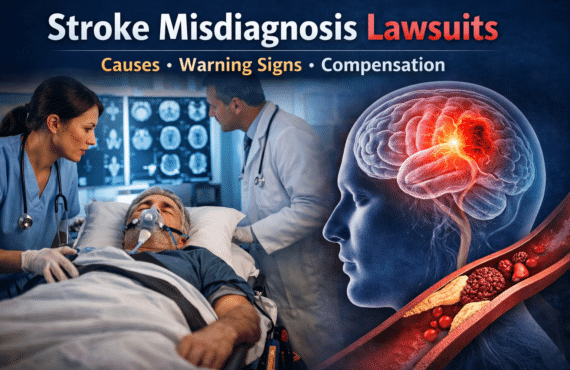
Victims and families affected by stroke misdiagnosis errors may have legal options through a medical malpractice claim in South Carolina.
A stroke is a medical emergency where every second matters. When doctors fail to recognize the signs, the results can be life-changing or even deadly.
It’s important to know the causes of stroke misdiagnosis, common warning signs of a stroke, and what compensation you may recover if negligence caused harm.
A stroke happens when blood flow to the brain is blocked or when a blood vessel bursts. Without oxygen, brain cells begin to die within minutes. Therefore, fast diagnosis and treatment are critical. Early care can reduce long-term damage and even lower the risk of future strokes by up to 80%.
When a doctor fails to act quickly, a stroke misdiagnosis can lead to severe complications like brain injury, paralysis, or death.
Recognizing stroke symptoms early can save lives. Unfortunately, many stroke misdiagnosis cases happen because these warning signs are ignored or misunderstood.
Common symptoms include:
Even mild symptoms should be taken seriously. A delay in treatment can make the difference between recovery and permanent disability, or even death.
Unfortunately, misdiagnosis is more common than many people realize.
These numbers show that stroke misdiagnosis is not rare—and it often leads to devastating outcomes.
There are several reasons why a misdiagnosis may happen, especially in busy emergency rooms:
1. Failure to Recognize Symptoms: Some stroke symptoms can appear mild or unusual. Patients with dizziness or headaches are often misdiagnosed with less serious conditions.
2. Misinterpreting Test Results: Errors in reading CT scans or MRIs can delay diagnosis or lead to the wrong treatment.
3. Delayed Testing or Imaging: Failing to order imaging tests quickly can result in missed treatment windows, which are critical for stroke care.
4. Assuming Low Risk: Doctors may overlook stroke in younger or healthier patients, even when symptoms are present.
5. Emergency Room Overcrowding: High patient volume and time pressure can lead to rushed decisions and missed warning signs.
Each of these failures can contribute to a dangerous stroke misdiagnosis.
For more information on common causes and warning signs of a stroke: American Stroke Association
The effects of a stroke misdiagnosis can be severe and long-lasting. When doctors miss the signs of a stroke, patients often lose valuable time that could have prevented serious damage.
One of the biggest risks is missing the short window for treatment. Certain medications, like clot-busting drugs, must be given within a few hours of symptoms starting. If that window passes, the damage to the brain can become permanent.
A stroke misdiagnosis can also lead to the wrong treatment. For example, a patient may be sent home or treated for a less serious condition like migraines, vertigo, or anxiety. Without proper care, the stroke may worsen, leading to a second, more severe event.
Patients who experience a delayed diagnosis often face a much harder recovery. They may require long-term rehabilitation, including physical therapy, speech therapy, and occupational therapy. Some individuals never fully recover and must rely on caregivers for daily activities.
Possible complications include:
In many stroke misdiagnosis cases, families are left dealing with not only emotional pain but also financial stress. Medical bills can quickly add up, especially when long-term care is needed.
The bottom line is simple: when a stroke is not diagnosed in time, the consequences can affect every part of a person’s life.
Not every mistake by a doctor is considered malpractice. However, a stroke misdiagnosis may rise to the level of medical malpractice when a healthcare provider fails to follow the accepted standard of care (what a reasonably skilled and careful doctor would have done in the same situation). If most doctors would have recognized the signs of a stroke and acted quickly, then failing to do so could be considered negligence.
A stroke misdiagnosis may be malpractice in situations such as:
Another important factor is whether the mistake caused harm. Even if a doctor made an error, there must be a direct link between the stroke misdiagnosis and the patient’s injury. For example, if earlier treatment would have reduced brain damage, that connection can support a malpractice claim.
Because these cases can be complex, working with an experienced attorney, like David L. Hood can help you gather evidence, understand your rights, and build a strong claim.
In South Carolina, these cases often require expert medical testimony. A qualified medical expert reviews the case and explains how the provider’s actions fell below the standard of care.
It is also important to act quickly. South Carolina has a statute of limitations for medical malpractice claims, which means you only have a limited time to file a lawsuit. Contact The Law Offices of David L. Hood now, so we can get started helping you get the recovery you deserve.
If you or a loved one suffered harm due to stroke misdiagnosis, you may be entitled to compensation under South Carolina law:
Economic Damages
Non-Economic Damages
Wrongful Death Damages
If a loved one passed away due to a stroke misdiagnosis, families may seek compensation for funeral expenses and loss of companionship.
Some cases result in significant payouts. Studies show average settlements can exceed $1.8 million, with jury verdicts reaching much higher amounts.
To win a case in South Carolina, your legal team must prove:
Medical records, expert testimony, and imaging studies are often key evidence in stroke misdiagnosis cases. This is the reason it’s important to call an experienced medical malpractice attorney. Attorney David L. Hood and his legal co-counsel team closely look into your case, consult with medical experts and collect the evidence you need to obtain full payment. Contact us today!
Stroke malpractice cases can be difficult because symptoms vary widely. Some patients show obvious signs, while others have subtle symptoms like dizziness or fatigue. However, the law still requires healthcare providers to act reasonably and investigate symptoms thoroughly. When they fail, victims have the right to pursue justice.
If you believe a stroke misdiagnosis harmed you or a loved one, The Law Offices of David L. Hood can help you understand your legal rights.
Our team focuses on helping injury victims across South Carolina. We investigate medical records, consult experts, and fight for the compensation you deserve. Call us today!
The Law Offices of David L. Hood is proud to serve clients throughout South Carolina with dedication and compassion. The firm has earned recognition for legal excellence in Personal Injury and Medical Malpractice cases, and maintains strong client satisfaction through our over 100 five-star reviews. Clients consistently praise the firm’s responsiveness, professionalism, and commitment to achieving results.
A stroke can change a life in minutes—but a missed diagnosis can make things far worse. If you suspect a stroke misdiagnosis, it is important to act quickly. Speaking with an experienced South Carolina medical malpractice attorney can help you understand your options and protect your future.
You can reach us by phone at any of our 18 South Carolina locations or by chat, text or email.