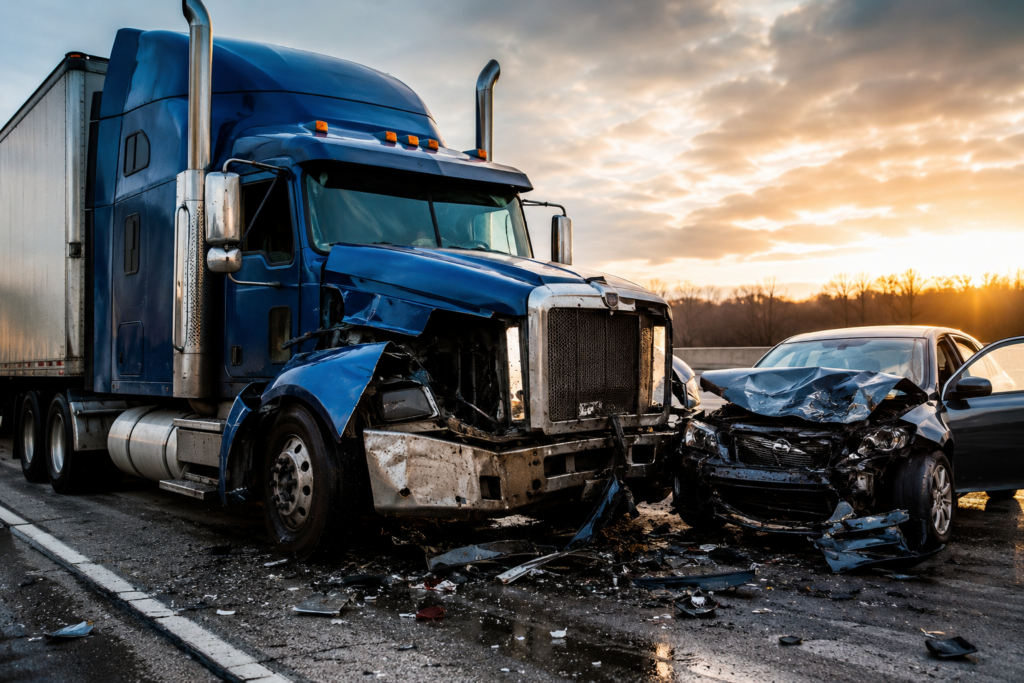
When people ask who can be held liable in a truck accident, the answer is not always just the truck driver. Depending on how the crash happened, a trucking company, truck owner, maintenance company, cargo loader, manufacturer, or other parties may also be responsible.
Truck accidents can cause devastating injuries because commercial trucks are much larger and heavier than passenger vehicles. South Carolina has specific rules for commercial motor vehicles and their drivers. In addition, commercial trucks weighing 26,001 pounds or more must meet the Federal Motor Carrier Safety Regulations.
If you or someone you love was injured in a truck accident, identifying every potentially responsible party can be an important part of protecting your legal rights.
There may be several answers to the question, who can be held liable in a truck accident? Liability depends on the facts of the crash and the evidence available. Some of the parties that may potentially be responsible include:
A truck accident investigation should look beyond the police report. Evidence such as driver records, electronic logging information, maintenance records, cargo records, vehicle data, photographs, videos, and witness statements may help establish what happened.
The truck driver may be liable when their driving causes an accident. Examples of truck driver negligence can include:
Commercial drivers must meet licensing and other requirements. The South Carolina Department of Motor Vehicles explains that commercial motor vehicle drivers generally need a commercial driver’s license, depending on the vehicle and its use.
However, determining who can be held liable in a truck accident requires looking at more than whether the driver made a mistake. Read on.
In many truck accident cases, the trucking company may be an important part of the liability investigation.
A trucking company could potentially face liability when its own negligence contributed to a crash. Examples may include negligent hiring, inadequate training, poor supervision, or allowing an unsafe driver to operate a commercial vehicle.
A company may also have responsibility for maintaining its vehicles and making sure drivers follow applicable safety requirements.
This is one reason a trucking company liability investigation can be complicated. A company may have lawyers and insurance representatives working on the case right after a crash. Preserving evidence and determining what happened ASAP can be critical to getting the best results.
The truck driver and trucking company do not always own the same vehicle. A commercial truck may be owned by a separate individual or business. Depending on the circumstances, the truck owner may have legal responsibility if negligent maintenance or another act or omission contributed to the accident.
Ownership, leasing arrangements, contracts, and insurance coverage can all matter when determining who is responsible for a truck accident.
Large trucks need regular inspections, maintenance, and repairs.
A defective brake system, worn tire, steering problem, or other mechanical failure can contribute to a serious collision. If a maintenance or repair company performed work improperly and that work contributed to the crash, the company may potentially be liable.
For example, if negligent maintenance caused a truck’s brakes to fail, the investigation should not stop with the driver. The maintenance records and repair history could provide key evidence about what happened.
Cargo must be loaded and secured properly.
Improperly loaded cargo can shift during transportation, affect a truck’s balance, or fall from a trailer. These problems can create dangerous conditions for everyone else on the road.
If a company or individual responsible for loading or securing the cargo acted negligently and that negligence contributed to the collision, that party could be part of a truck accident claim.
Sometimes a truck crash is caused or made worse by a defective component.
A tire, brake component, steering part, or other defective product could potentially cause a collision. When a defective product contributes to an accident, a product liability claim may be possible against the appropriate manufacturer, distributor, or other responsible party.
These cases require careful investigation because it is important to determine whether the part was defective and whether that defect caused or contributed to the injuries.
A serious commercial truck accident requires more than simply determining who received a traffic ticket or was found at fault.
An investigation may examine:
South Carolina incorporates federal commercial-driver safety regulations into its commercial driver’s license program. So, all applicable regulations need to be reviewed, to make sure everything was done to the letter of the law.
The goal is to determine what caused the crash and whether one or more parties failed to meet their legal duties. Let The Law Offices of David L. Hood and his co-counsel legal team begin putting together the evidence needed to file your lawsuit while you focus on recovering from your injuries. Our legal team is dedicated to giving you the legal representation you need and deserve. Contact us today!
A truck accident can result in serious physical, emotional, and financial harm. Depending on the circumstances, an injured person (or if someone died, their estate) may seek compensation for damages such as medical expenses, lost wages, reduced earning ability, pain and suffering, disability, wrongful death, as well as other losses caused by the accident.
The value and type of damages available depend on the specific facts of the case, including the nature and severity of the injuries.
Because multiple parties may be involved, identifying who is liable in a truck accident can also affect where the case is filed and what insurance coverages are available.
After a serious truck crash, call 911, get medical attention, report the accident to the police and any other appropriate agencies. If you can do so safely, take photographs of the vehicles, road, intersections, surrounding area, and obtain contact information for witnesses.
You should also be wary about giving recorded statements or signing documents for another party’s insurance company before understanding your rights.
Most importantly, do not assume that the truck driver is the only potentially responsible party. Evidence can wash away or disappear, vehicles can be repaired or moved, and memories can fade. So take action right away to protect yourself!
Speaking with a South Carolina truck accident attorney can help you understand the potential claims and parties involved in your case.
See our blog: South Carolina Truck Accident? Steps to take.
At The Law Offices of David L. Hood, we understand that a serious truck accident can affect every part of your life. We and our co-counsel legal team can investigate the circumstances surrounding the crash, identify potentially responsible parties, review available evidence, and pursue compensation for injuries and losses when another party’s negligence caused the accident.
Attorney David L. Hood has represented injured people in South Carolina since 1991 and has more than 35 years of experience fighting insurance companies and their lawyers. The firm has also received awards including America’s Top 100 Personal Injury Attorneys, the Nation’s Top One Percent (by the National Association of Distinguished Counsel), and recognition as The National Trial Lawyers Top 100. These honors reflect the firm’s commitment to representing clients in serious injury cases.
If you were injured in a commercial truck accident, you do not have to figure out who’s responsible in a truck accident on your own. An experienced South Carolina personal injury attorney can review what happened at the crash site and help determine what are the best legal options available.
The experienced team at The Law Offices of David L. Hood is ready to answer your questions, explain your options, and fight for the benefits you deserve. You can call us at one of our 18 SC locations, or by text, chat, or email for a free consultation. There are time limits to file, so call us today!